Introduction to Cloud Platforms
Every team eventually has this argument. Someone slams the table for AWS because "it's what everyone uses." Someone else fires back with Azure because the whole company already lives inside Outlook and Excel. And then there's the quiet one in the corner muttering about Google Cloud because his ML pipeline runs twice as fast on it.
Nobody's wrong. That's the annoying part. So let's actually settle this — not with vendor brochures, but with what these three clouds are genuinely good at, where they fall apart, and who should be picking what.
Cloud platforms are basically rented computing power — servers, storage, databases, networking, AI tools — that you access over the internet instead of buying and maintaining your own hardware. Instead of owning a room full of machines, you spin up exactly what you need, pay for what you use, and scale up or down in minutes.
Three companies have ended up owning most of this market: Amazon (AWS), Microsoft (Azure), and Google (Google Cloud). Together they control close to two-thirds of the entire global cloud industry, and picking between them is one of the first real infrastructure decisions almost every company makes.
None of the three is objectively "the best." They just optimize for different things — and knowing what those things are is the whole point of this comparison.
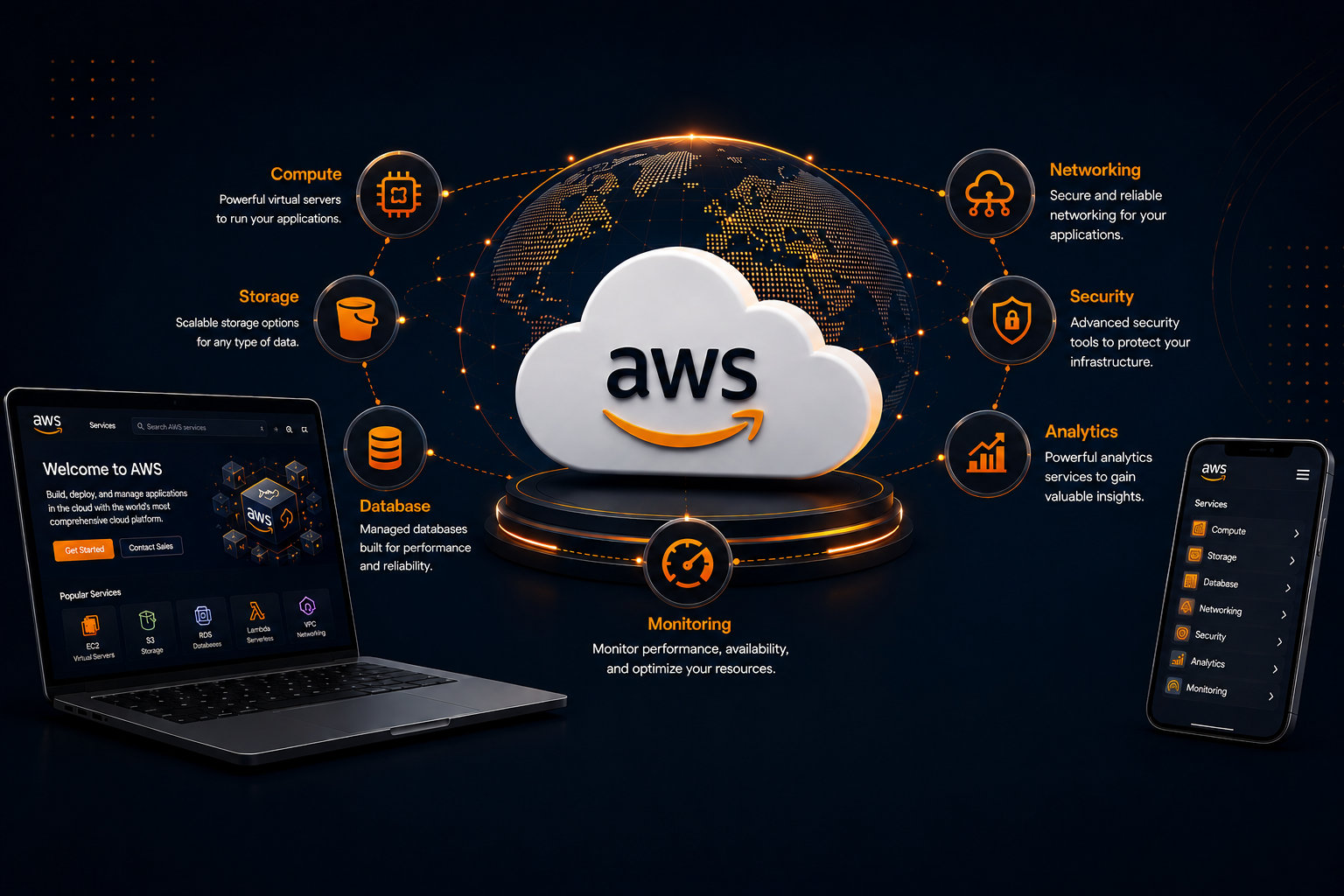
What is AWS?
Amazon Web Services launched in 2006, making it the oldest of the three by a wide margin. That head start shows up everywhere — over 200 services, endless documentation and tutorials, and a talent pool so deep you'll never struggle to hire for it.
AWS's whole identity is breadth. Whatever you're trying to build, there's almost certainly an AWS service for it — sometimes three or four competing ones for the same job. That's a strength for flexibility, but it's also why beginners find AWS overwhelming. Ask five engineers "what's the right way to deploy this on AWS" and you'll get five different answers.
Pricing is famously complex too — "surprise AWS bill" is basically its own genre of horror story online. The console still feels a bit dated compared to the other two. But for raw capability and ecosystem maturity, nothing beats it.
What is Azure?
Microsoft Azure's real weapon isn't cloud tech itself — it's Microsoft's decades-long grip on corporate IT. If your company already runs on Windows Server, Active Directory, or Office 365, Azure just clicks into place, because it was built to.
This is exactly why Azure dominates in large enterprises and government. The compliance boxes are already checked, IT teams don't have to relearn everything, and existing Microsoft contracts often bundle Azure support in. Its hybrid cloud tools — mixing on-prem servers with the cloud — are genuinely some of the strongest in the industry.
The rough edges: documentation quality swings wildly between services, and non-Windows workloads can feel like an afterthought in Azure's world.

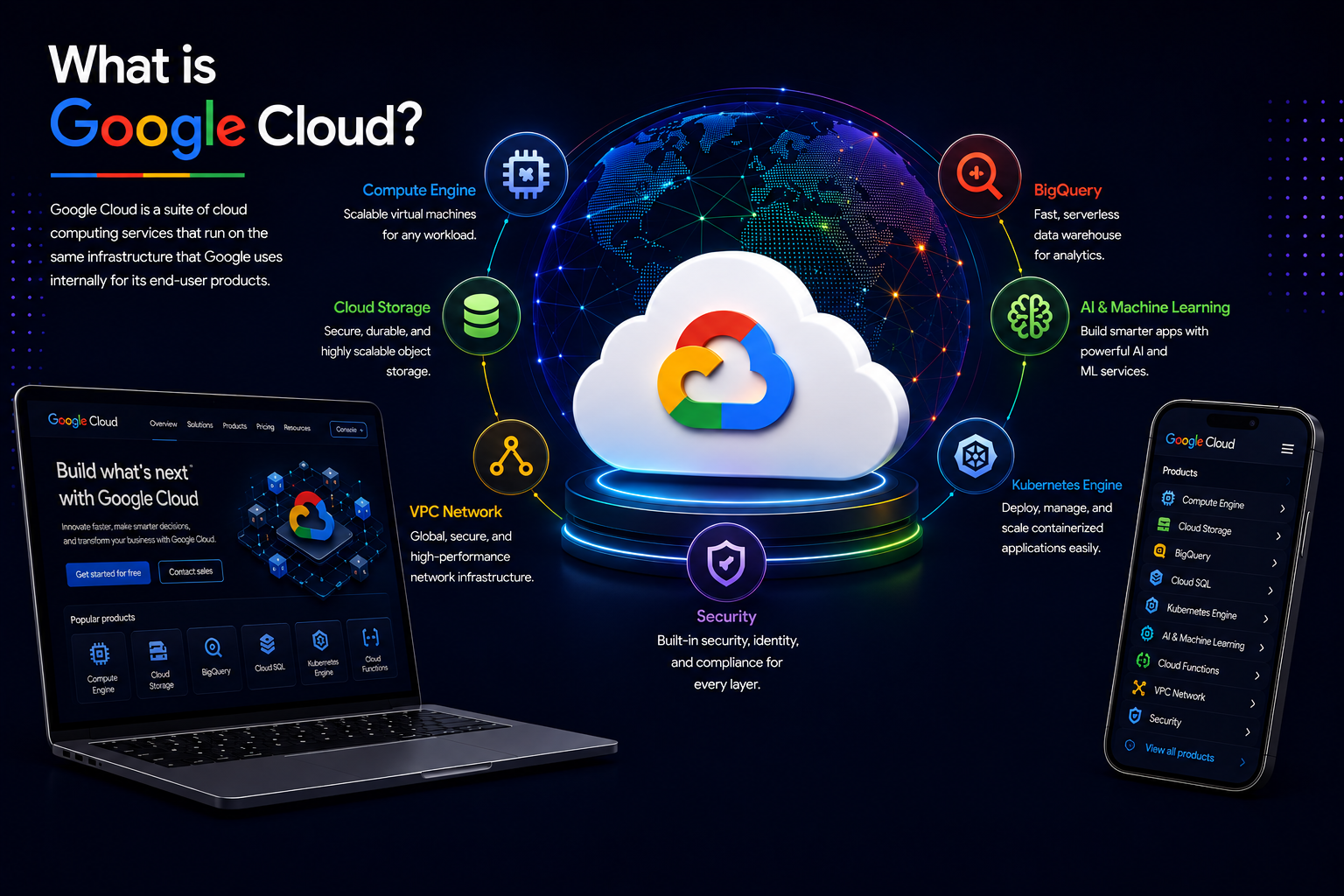
What is Google Cloud?
Google Cloud isn't trying to out-service AWS or out-enterprise Azure. It's playing a narrower, deeper game — data, machine learning, and Kubernetes (which Google literally invented) are where it genuinely leads.
BigQuery and Vertex AI aren't just good products bolted on for marketing — they're the same infrastructure quietly powering Google's own AI systems. If your team runs serious ML workloads or lives inside Kubernetes, GCP feels less like a rented cloud and more like home turf. The console is also just cleaner — built by people who clearly use developer tools themselves.
The trade-off: fewer regions, a thinner service catalog, and a smaller specialist talent pool, which can make hiring a bit harder.
Key Differences Between AWS, Azure, and Google Cloud
| Feature | AWS | Azure | Google Cloud |
|---|---|---|---|
| Market share (2026) | ~28-30% | ~21-24% | ~13-14% |
| Growth rate | ~19-28%/yr | ~35-40%/yr | 60%+/yr |
| Core strength | Breadth of services | Enterprise & hybrid integration | Data & AI tooling |
| Best for | Startups, general workloads | Enterprises, Microsoft-heavy stacks | AI/ML, data, Kubernetes-first teams |
| Biggest weakness | Overwhelming choice, pricing shocks | Inconsistent docs and UI | Fewer regions, smaller talent pool |
| Console experience | Functional, dated | Improving, inconsistent | Clean, developer-friendly |
The pattern is simple once you see it: AWS wins on options, Azure wins on enterprise trust, Google wins on technical depth in AI and data. None of them are trying to win the same game.
Pricing Comparison
All three follow the same basic model — pay for what you use, with discounts if you commit to longer terms. But the details differ enough to matter.
AWS has the most granular pricing options — on-demand, reserved instances, spot instances, savings plans — which gives you maximum control but also maximum room to accidentally overspend. It's genuinely easy to leave something running and get a bill you weren't expecting.
Azure pricing tends to work out well if you're already a Microsoft customer, since existing enterprise agreements and licensing (like Windows Server or SQL Server) can be applied toward Azure costs. Standalone, it's roughly comparable to AWS.
Google Cloud often comes out cheaper for sustained, predictable workloads, partly because of automatic sustained-use discounts that don't require you to commit upfront the way AWS reserved instances do. For compute-heavy, always-on workloads, this can add up to real savings.
None of the three publishes pricing that's easy to compare apples-to-apples — the real move is running your actual expected workload through each provider's calculator before committing.
Performance and Reliability
All three platforms run on massive, well-engineered global infrastructure, and outright outages are rare enough to make headlines when they happen. That said, there are some general patterns:
- AWS has the largest number of regions and availability zones globally, which matters if you need to serve users close to them in more parts of the world.
- Azure has strong reliability overall but has historically had a few more regional hiccups than AWS, particularly during major update rollouts.
- Google Cloud has fewer regions than the other two, but its network backbone — the actual fiber connecting data centers — is considered one of the best in the industry, which shows up in low-latency performance.
For most companies, all three are reliable enough that this stops being the deciding factor pretty quickly. It matters more if you're operating at serious global scale.
Security Features Comparison
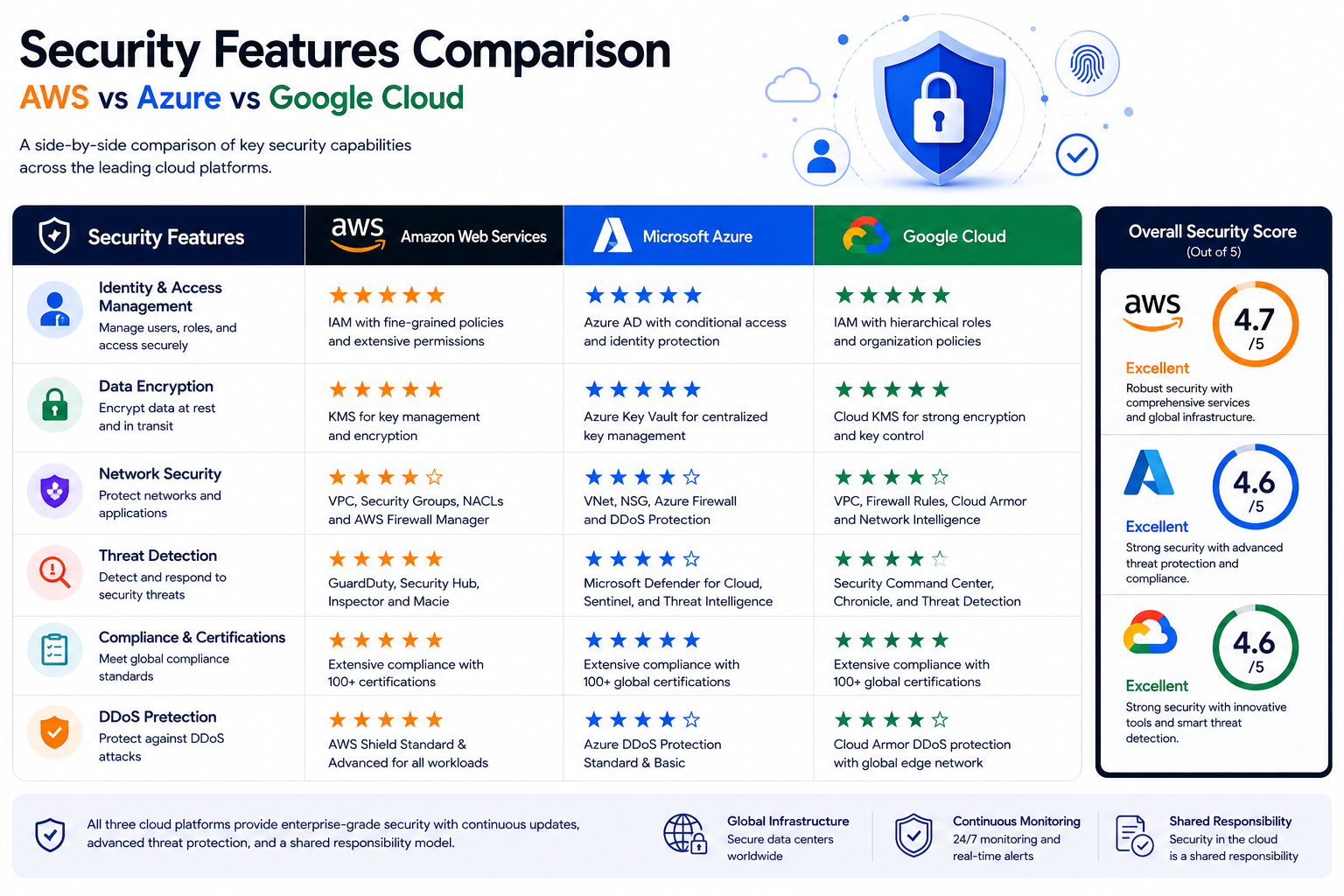
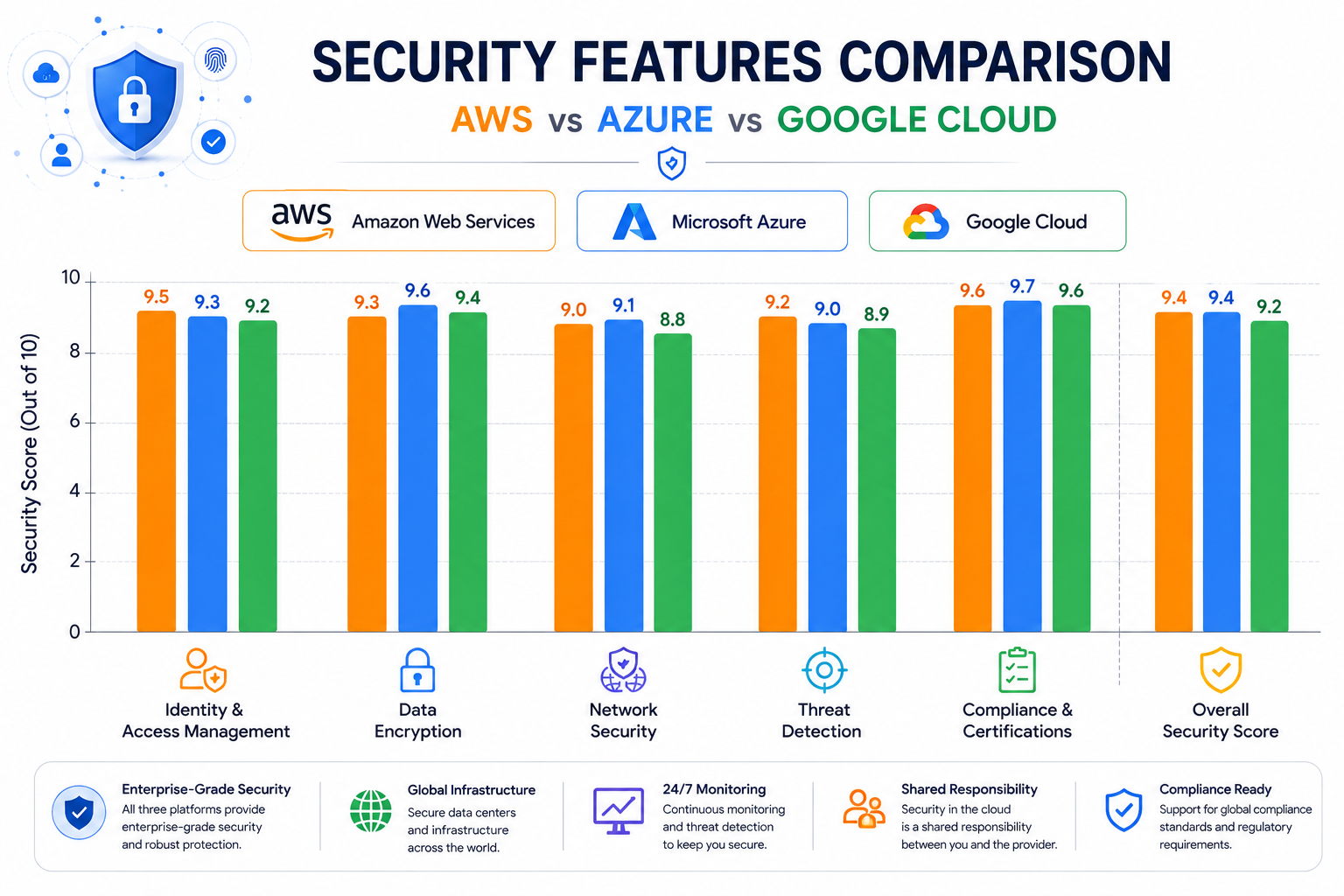
Security-wise, all three take it seriously, since a major breach would be catastrophic for their business. The differences are more about how security is delivered than whether it exists.
AWS offers deep, granular controls through IAM (Identity and Access Management), and a long list of compliance certifications. The flexibility is powerful but also means misconfiguration is a real risk — most cloud security incidents come from customers misconfiguring permissions, not from AWS itself being breached.
Azure leans on its Active Directory heritage, making identity and access management feel familiar to anyone who's managed Windows environments. It's particularly strong for organizations with complex compliance needs (government, healthcare, finance) thanks to its certification coverage.
Google Cloud benefits from Google's own internal security practices (the same ones protecting Gmail and Search), with strong default security postures out of the box. Its BeyondCorp zero-trust model is one of the more forward-thinking approaches in the industry.
In practice, breaches on any of the three almost always trace back to customer misconfiguration rather than a failure of the underlying platform — so the real security question isn't "which cloud is safer" but "which one will your team configure correctly."
Conclusion
There's no universal winner here — just the right fit for what you're building and who you already are as a team.
- Go with AWS if you want maximum flexibility, the widest range of services, and you're not tied to a specific ecosystem yet.
- Go with Azure if your company already runs on Microsoft tools, or you're selling into enterprise and government clients where compliance and hybrid cloud matter.
- Go with Google Cloud if AI, machine learning, or data is the actual core of your product, or your infrastructure is already built around Kubernetes.
Plenty of serious companies don't even pick just one — they run AWS for core infrastructure, GCP for data and ML, and Azure wherever enterprise integration is non-negotiable. It's more complex to manage, but it also means no single vendor's outage or price hike can take the whole business down.